
SO, I have read 11 of the 12 longlisted novels before the announcement of the shortlist tomorrow - PHEW. It's been a wonderful mind journey and I've found it to be a significant reliever of stress and source of enjoyment. I really wish I could've got The Garden of Evening Mists done as well, but ce sera sera. My predictions below don't factor in Tan Twan Eng's book, so that's important to bear in mind.
I completely loved 5 of these books (Philida, Communion Town, Bring Up the Bodies, The Lighthouse, and The Yips), and will read them again and again. I enjoyed another 3 (Skios, The Unlikely Pilgrimage of Harold Fry and The Teleportation Accident), while not finding them stunning. Only 3 of the 11 were not my cup of tea, and, in fact, one of them I still see as a skilfull, mostly worthwhile book (Narcopolis ). There was only one I really disliked (Umbrella) and one I thought was significantly overdone (Swimming Home).
I have two sets of predictions here - one is my personal shortlist (the books I'd pick, if I was picking!) and one's the shortlist I think most likely to be announced tomorrow. I could be hilariously wrong, it wouldn't be the first time :-)
MY SHORTLIST
Philida
Communion Town
Bring Up the Bodies
The Yips
The Lighthouse
The Teleportation Accident
PREDICTED ACTUAL SHORTLIST
Bring Up the Bodies
The Unlikely Pilgrimage of Harold Fry
Narcopolis
The Yips
The Lighthouse
Umbrella
And ... the winner?
I'm torn here, between my three favourites, but if I were awarding the prize, I'd have to give it to Hilary Mantel's Bring Up the Bodies, by a nose from my other two favourites,Philida and The Yips. It is such an achievement, that book, even more for the second in a trilogy.
In terms of what will actually win - one of Bring Up the Bodies, The Lighthouse, or, if the judges are determined to be contrary, maybe the incomprehensible Umbrella. The smart money would have to be on Mantel's book, I reckon.
*UPDATED*
Well, I got 4 out of 6 right on my predicted actual list :-) The shortlist is:
The Garden of Evening Mists
Swimming Home
Bring up the Bodies
The Lighthouse
Umbrella
Narcopolis
They left off The Yips and Harold Fry in favour of The Garden of Evening Mists and (ugh) Swimming Home. Of course I haven't yet read Evening Mists, so that might be totally fair cop, I'll see soon!
For my personal choices, it's a lower hit rate - only Mantel and Moore's books. With the other four, well. Did not like Umbrella, thought Swimming Home was average, and admired Narcopolis but found it a bit depressing. Barring great revelations in reading Evening Mists, I'm still backing Bring Up the Bodies to win, but I wouldn't be unhappy if The Lighthouse took it either.
Showing posts with label Booker Prize 2012. Show all posts
Showing posts with label Booker Prize 2012. Show all posts
Monday, September 10, 2012

Reading Notes: The Teleportation Accident

The core premise of Beauman's book - if it could be said to have one - seems to me to be somewhere between "History is something that happens in the background while people are living their lives" and "Personal catastrophes, no matter how slight they appear to others, are always more painful and immediate than grand societal tragedies." Neither of these are novel propositions, but what Beauman has done here is rise to the challenge of expressing them via a pretty unlikeable main character and a really unappealing cast of suppotrting characters.
Egon Loeser (for which read Loser) is a German set designer in Berlin at the start of the novel, which opens in 1931. Most people, when they read that a book is set in 1930s Berlin, might assume that it is, perhaps, about the rise of the Third Reich, or that this is at least a critical part of its backdrop. This book, however, is not even tangentially about Adolf Hitler, Nazism and the horrors of genocide. It is about Loeser's obsession with, in this order: sex; himself; a seventeenth century set designer called Lavicini and his invention, The Teleporation Device; and a beautiful girl called Adele Hitler (no relation), who mostly interests him because she won't sleep with him.
The book follows Loeser as he follows Adele first to Paris, then to Los Angeles. Loeser is oblivious to any broader themes that might be playing out in his country, city or adopted residences; the scene where he casually joins in a book burning, relieving some of his frustration, and then strolls away, totally unconcerned with what's just happened, is almost sickeningly flat in its emotional timbre. Later, in Los Angeles, Loeser won't open letters from his Jewish friend in Berlin, who's documenting the rampant rise of anti-semitism, because he finds them boring. In New York years later, in a dreamlike sequence in which he's interrogated by the House UnAmerican Activities Committee (Joe McCarthy's mob), he's uninterested in the Communist activities of his German-exile friends in LA, and not at all keen to save them. Yes, he is pretty contemptible, our chief protoganist.
But while he is venal, shallow and careless, he's not evil; Loeser is, to quote Doulgas Adams (appropriately, as this book verges on Adams-esque at times), "just this guy, you know?" He's a self concerned, unaware, emotionally backward, intelligent, pampered drifter. He doesn't mean to do ill but doesn't really care enough about anything to avoid it. In fact, Loeser only really cares about getting laid (which he doesn't manage at all for most of the 7 year period of the core novel, only breaking his drought at the very end), preferably by Adele, who he has come to see as his personal saviour in some weird kind of way.
What carries this book along is its humour (it's consistently funny, although not to a snort-tea-out-of-your-nose level), its wonderful cast of characters (not one of whom, with the possible exception of the millionaire eccentric Gorge, is even vaguely sympathetic) and its interweaving of subplots. The running gag of the Lavicini's teleportation device is managed slickly (I particularly delighted in Loeser's insistence, when asked to produce a Christmas play for the University, that his pet theme be worked in, resulting in a pageant called The Christmas Teleportation Accident). Any book that can make you accept a character who can't distinguish images of things from the things themselves, a serial kiling boffin, an impotent American con man in Paris, a terminally bored heiress, an author of hardboiled noir who looks like a furniture salesman and a stone cold Fifth Columnist composer as "just a bunch of people you might know" is doing something very, very right.
Overall, I liked this a lot. If the ending hadn't been so weak (it is a shocker of a final chapter), I'd even say I liked it enormously. If you're looking for something to relax with, I'd recommend it.
Overall verdict for the shortlist?
Yes, definitely.
Saturday, September 1, 2012
Reading Notes: The Lighthouse and The Yips
I've now read 10 of the longlist titles, and plan to start the 11th - Ned Beauman's The Teleportation Accident - tomorrow, if I get enough work done by then. This means that, barring catastrophe, I should have well and truly read the 12 longlist books before the announcement of the shortlist on 11 September. This is an unexpected but very pleasant circumstance.
 Book 9 in my reading project turned out to be Nicola Barker's The Yips. Barker is a British novellist who's been Booker-nominated before - in 2007, for the novel Darkmans, which I haven't read but now intend to.
I've seen reviews and interviews where Barker is characterised as an eccentric writer, a disordered writer, or a mistress of Murray-esque sprawl. I don't think any of those evaluations are wrong, but what she also is - based on what she achieves in this book, anyway - is a kind of magician of patter, a genius of conversation and interaction. The plot might be (is, in fact) a bit scattered and amorphous, but the book is more than good enough to carry it, because it's not really based on plot but on characters, dialogue and, well, patter.
I am not, as a general rule, a big fan of books that are primarily character-based. I have an especial distaste for books in the "several or many zany / wacky / loveable rogue characters doing zany / wacky / loveable rogue things" mode. In some ways, therefore, it's surprising that I enjoyed The Yips as much as I did. (Here might be the right time to say that I did enjoy it, enormously; I think it's a wonderful book and it has rocketed to equal-second on my personal list of this year's contenders).
But even though The Yips is completely about the interplay of several characters who might fairly be described as a bit odd at least, this book just works. None of the characters, with the possible exception of Gene (and even there I have my doubts) are especially well rounded, but they are not caricatures or archetypes either; they are stunningly recognisable, over-vivid but not implausible, people. Messy reality at warp speed, perhaps.
The book seems like it might be going to be about Stuart Ransom, self-obsessed washed-up pro golfer (from whence the book gets its name - "the yips" being an affliction of golfers that makes them fail at putting, apparently), but quickly it's obvious that it's no more about him, particularly, than any of the other characters dealing with their own personal yips - from Esther, his heavily pregnant Jamaican manager, through cancer survivor and all-round good guy Gene; his Anglican cleric wife, Sheila, who's going through a crisis of faith; the Puckish troublemaker, Jen, whose core narrative purpose is to stir up everyone she comes into contact with; agoraphobic tattooist, Valentine; and, through her, her tragicomic mother "Frederique" (except not really ... you'd have to read it to understand). Even the more minor characters jump up and strut their stuff - I particularly liked rebel Muslim wife Aamilah, poor, neglected Toby, the scary Vicky, and the preternaturally elderly teenager Israel.
What actually happens in this book (a lot of which is nonsensical and some of which is extremely funny, such as the fight on the outdoor chessboard) matters much less than what the characters say, to each other and in their inner dialogues. It's a novel borne on a river of chatter, and what can I say except - it works.
 The Lighthouse is by another one of the debut novellists on this year's list, Alison Moore. It's quite a little book - certainly by comparison with some of the others! - but in this case, short does not equate to slight, but, rather, to tight, sharp prose and a grip on her story that bodes well for this author's future.
One thing this year's Booker reading is certainly doing is driving home to me the essential validity behind the "only X number of basic stories in the world" idea. On reading The Lighthouse, I was struck immediately by its thematic similarity to Rachel Joyce's The Unlikely Pilgrimage of Harold Fry, the first book I read on the longlist. Like Harold, Futh is a man deeply affected by (a) The Desertion of the Mother (obvious trope), (b) The Decline and Abuse of the Father (ditto) and Inability to Sustain Healthy Adult Relationships, Derived from (a) and (b). Futh is possibly even less functional a human being than Harold - after all, Harold does learn things through his rambling journey and some of those things are deployed to good effect in salvaging some relationship with his wife. Futh's journey, undertaken after his separation from his Angela, is less purposive, less reflective and less successful for him, but, ultimately, much more successful as a novel, in my mind.
Moore has a great touch with motifs and symbols - the silver perfume bottle lighthouse, which Futh carries as a reminder of his mother, is used to potent and repeated effect. With such a brief space to tell her story, Moore is very disciplined with her descriptions, plot devices and characters; at times it verges on the spare, but never to the book's detriment.
This isn't at all a happy or upbeat book, and the central character, Futh, is at once pathetic (in the old sense of that word - evoking pathos or pity - rather than the more modern sense of 'useless or worthy of derision') and not greatly sympathetic, in that I didn't feel a strong connection to him or a burning concern with his fate. The other characters are so sharply drawn - Ester, in particular - that they add to this grey clarity of effect, this sense that we should feel warmly to them (but we don't). It's quite a chilly book, in that sense; there's little in the way of colour and vigour in it.
That said, it's a beautifully written, extremely readable book, that shows a great deal of craft and control. I think it's a very good book, in fact; considerably better, for instance, than the longer, more rambling Harold Fry. I would like to go back and read it again when I have had time to let it settle a bit; I think it will repay re-readings, this one.
Overall verdict for shortlist?
Yep, I'll have both of these for the shortlist, and I think the judges will too.

I've seen reviews and interviews where Barker is characterised as an eccentric writer, a disordered writer, or a mistress of Murray-esque sprawl. I don't think any of those evaluations are wrong, but what she also is - based on what she achieves in this book, anyway - is a kind of magician of patter, a genius of conversation and interaction. The plot might be (is, in fact) a bit scattered and amorphous, but the book is more than good enough to carry it, because it's not really based on plot but on characters, dialogue and, well, patter.
I am not, as a general rule, a big fan of books that are primarily character-based. I have an especial distaste for books in the "several or many zany / wacky / loveable rogue characters doing zany / wacky / loveable rogue things" mode. In some ways, therefore, it's surprising that I enjoyed The Yips as much as I did. (Here might be the right time to say that I did enjoy it, enormously; I think it's a wonderful book and it has rocketed to equal-second on my personal list of this year's contenders).
But even though The Yips is completely about the interplay of several characters who might fairly be described as a bit odd at least, this book just works. None of the characters, with the possible exception of Gene (and even there I have my doubts) are especially well rounded, but they are not caricatures or archetypes either; they are stunningly recognisable, over-vivid but not implausible, people. Messy reality at warp speed, perhaps.
The book seems like it might be going to be about Stuart Ransom, self-obsessed washed-up pro golfer (from whence the book gets its name - "the yips" being an affliction of golfers that makes them fail at putting, apparently), but quickly it's obvious that it's no more about him, particularly, than any of the other characters dealing with their own personal yips - from Esther, his heavily pregnant Jamaican manager, through cancer survivor and all-round good guy Gene; his Anglican cleric wife, Sheila, who's going through a crisis of faith; the Puckish troublemaker, Jen, whose core narrative purpose is to stir up everyone she comes into contact with; agoraphobic tattooist, Valentine; and, through her, her tragicomic mother "Frederique" (except not really ... you'd have to read it to understand). Even the more minor characters jump up and strut their stuff - I particularly liked rebel Muslim wife Aamilah, poor, neglected Toby, the scary Vicky, and the preternaturally elderly teenager Israel.
What actually happens in this book (a lot of which is nonsensical and some of which is extremely funny, such as the fight on the outdoor chessboard) matters much less than what the characters say, to each other and in their inner dialogues. It's a novel borne on a river of chatter, and what can I say except - it works.

One thing this year's Booker reading is certainly doing is driving home to me the essential validity behind the "only X number of basic stories in the world" idea. On reading The Lighthouse, I was struck immediately by its thematic similarity to Rachel Joyce's The Unlikely Pilgrimage of Harold Fry, the first book I read on the longlist. Like Harold, Futh is a man deeply affected by (a) The Desertion of the Mother (obvious trope), (b) The Decline and Abuse of the Father (ditto) and Inability to Sustain Healthy Adult Relationships, Derived from (a) and (b). Futh is possibly even less functional a human being than Harold - after all, Harold does learn things through his rambling journey and some of those things are deployed to good effect in salvaging some relationship with his wife. Futh's journey, undertaken after his separation from his Angela, is less purposive, less reflective and less successful for him, but, ultimately, much more successful as a novel, in my mind.
Moore has a great touch with motifs and symbols - the silver perfume bottle lighthouse, which Futh carries as a reminder of his mother, is used to potent and repeated effect. With such a brief space to tell her story, Moore is very disciplined with her descriptions, plot devices and characters; at times it verges on the spare, but never to the book's detriment.
This isn't at all a happy or upbeat book, and the central character, Futh, is at once pathetic (in the old sense of that word - evoking pathos or pity - rather than the more modern sense of 'useless or worthy of derision') and not greatly sympathetic, in that I didn't feel a strong connection to him or a burning concern with his fate. The other characters are so sharply drawn - Ester, in particular - that they add to this grey clarity of effect, this sense that we should feel warmly to them (but we don't). It's quite a chilly book, in that sense; there's little in the way of colour and vigour in it.
That said, it's a beautifully written, extremely readable book, that shows a great deal of craft and control. I think it's a very good book, in fact; considerably better, for instance, than the longer, more rambling Harold Fry. I would like to go back and read it again when I have had time to let it settle a bit; I think it will repay re-readings, this one.
Overall verdict for shortlist?
Yep, I'll have both of these for the shortlist, and I think the judges will too.
Sunday, August 26, 2012
Reading Notes: Bring Up the Bodies and Umbrella
Having read (well ... read and / or sampled, as I'll discuss) two more of the Booker longlist titles now, I'm up to 8 read and it's not even quite the end of August, which is way better - in fact, 5 better! - than I managed last year before the announcement of the shortlist. I find this mystifying given that last year I was doing very little paid work, whereas this year I'm combining my reading with quite a hefty workload, and my childcare and household commitments are not less. Maybe this is just a really high quality, non stodgy list? Maybe I have invested more heavily in it because I'm reviewing as I go, or because reading is a key relaxaton for my work-taut mind? Who can say.
Anyway - on to Hilary Mantel's Bring Up the Bodies and Will Self's Umbrella.
 Bring Up the Bodies is Mantel's sequel to the lauded Wolf Hall, which itself won the 2009 Man Booker Prize. Continuing the story of Henry VIII through the lens of his bovver-boy advisor, Thomas Cromwell, this book is, if anything, even better than its predecessor - and I say that as someone who loved Wolf Hall and thought it one of the most deserving Booker winners of the past 10 years.
Historical fiction, like other genre fiction, is often branded as less-than when considered with "literary" fiction. Perhaps the genre than suffers from this presumption of inferiority the most is romance fiction, but erotica, science fiction, fantasy, crime fiction and horror / thriller fiction are also tarred with the "not to be taken seriously" brush. Indeed, as I wrote in an earlier review, I think the unwillingness to take speculative / fantasy fiction on its merits will count against the wonderful Communion Town in this process.
However, every so often a book comes along that is just so good, just so stunningly, irresistibly well written and compelling, that considerations of genre are pushed aside. Wolf Hall was one such, and Bring Up the Bodies is most certainly another.
Bring Up the Bodies takes up the story of Henry VIII's self-glorying, brutal matrimonial depredations at the point where he is starting to weary of Anne Boleyn (and, specifically, her failure to give him a son) and has begun to notice meek Jane Seymour, the girl who will soon be his third Queen, mother of his only son, and corpse, in that order.
Using Cromwell as the focus and narrator (although, and this is a very interesting narrative choice, in the second person, not the first), Mantel unpicks the machinations, lies and distortions, the cruelties and tunnel vision, that led Anne to the chopping block. She spares nothing in her portrait of a clever, injudicious, arrogant woman who was nonetheless not evil, but undone by the petulance and inconstancy of spoiled-child Henry and the cunning, snakeish mind of Cromwell. As Bettany Hughes points out in her excellent review in The Telegraph, "The story of the world is littered with the corpses of clever, charismatic women. To make your mark pretty consistently over the past 3,500 years, as a female of the species you have had to be extra special; and being special in historical times usually led to the cold embrace of an early grave."
I like historical fiction generally (it's a genre that does appeal to me) and I've read more than one historical novel set in Tudor times; Henry and his three children-successors (boy king Edward, Bloody Mary, and Good Queen Bess) are colourful, attractive figures for storytelling in themselves, and each of their reigns also saw other significant shifts that make a good basis for a tale. But Mantel's books are a cut (and a half) above any other fiction I've read set in this period. They are completely rooted in the concerns, mentalities and preoccupations of their times, yes, but they also have much more far-reaching things to say about power and politics and gender. Mantel writes a story that is not just persuasive and completely engaging, but important, in the ways it shines a light on how power traps and declaws all challenges to itself, and how easy, how horrifyingly easy, it is to destroy a human being with nothing more than pretty, palatable lies.
In short, this is a truly great book. I would strongly recommend it to anyone (although read Wolf Hall first to get the proper lead-in!)
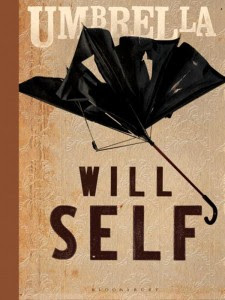 I must, in justice, preface my comments on Umbrella with an admission - I didn't finish this book. This is the first of the eight I've read so far that has defeated me; I just couldn't muster the will to push through, and I left it (according to my Kindle, at "63% read".) So it is possible that it turned some kind of significant corner and all came together in a wonderful crescendo at the end. (I doubt it, but I can't rule it out).
Umbrella is, in short, a book about consciousness and its absence. Using mental-home patient Audrey Death, and her treating psychiatrist Zack Busner, as its chief foci, it journeys through Zack's own dismal mental landscape, his bodies buried in the mind, and Audrey's frozen, amber-embedded world. A victim of encephalitis lethargica, which left some sufferers in a state of catatonic unreachability with repetitive physical ticcing, Audrey's inner dialogue is caught in her early 20th century childhood, featuring sisters, brothers, parents, and incidents that are long past and gone. Zack Busner's, on the other hand, is less sharp-edged; it's just dark grey and maudlin at all times, informed by his half-communicated memories of his ill brother and his own deep sense of futility.
It sounds like the makings of a good and interesting story; and, I must be fair, the book isn't without interest. Audrey emerges as an engrossing character, although Zack, to my mind, never lifts above "miserable and annoying". Some of the literary tricks are neatly executed, and there are some great turns of phrase.
However, I found the central narrative devices - dialect-based stream of consciousness for Audrey, and internal shape-shifting monologue for Zack - to be really difficult to get sense from, and, after a while, more wearying than rewarding. I understand (I think) what Self was doing with loading Audrey's text with heavily accented writing, but it made reading it a tiring and frustrating process, and I found I was spending my energy on decoding the thick text rather than allowing the story and its overarching themes to emerge and settle. Zack, and the picture of 1960s / 1970s medical treatment he provides, I just found unbearably depressing and bleak. After a while, between the hard to comprehend and the hard to like, there was nothing left to inspire me to keep pushing through to see if I could find the story arc hidden among the very literary stylings of the text.
So I would not go so far as to describe Umbrella as a "bad" book; that would be inaccurate and unfair, as I've not finished it and I did have moments of recognising power and engagement in the text. I would, however, unhesitatingly describe it as a challenging read, and one that, more than halfway into it, hadn't delivered nearly enough pay-off for the effort that it demanded of readers. YMMV, naturally, but this is definitely not one of my favourites.
Overall verdict for shortlist?
Bring Up the Bodies should be shortlisted if there is any justice in the world. The only reason it might not be (or might be but then won't win) is the bias against awarding the prize to two books in the same series.
Umbrella might be shortlisted if the judges like this kind of thing but there is no way I'd ever shortlist it. (I wouldn't have longlisted it either!)
Anyway - on to Hilary Mantel's Bring Up the Bodies and Will Self's Umbrella.

Historical fiction, like other genre fiction, is often branded as less-than when considered with "literary" fiction. Perhaps the genre than suffers from this presumption of inferiority the most is romance fiction, but erotica, science fiction, fantasy, crime fiction and horror / thriller fiction are also tarred with the "not to be taken seriously" brush. Indeed, as I wrote in an earlier review, I think the unwillingness to take speculative / fantasy fiction on its merits will count against the wonderful Communion Town in this process.
However, every so often a book comes along that is just so good, just so stunningly, irresistibly well written and compelling, that considerations of genre are pushed aside. Wolf Hall was one such, and Bring Up the Bodies is most certainly another.
Bring Up the Bodies takes up the story of Henry VIII's self-glorying, brutal matrimonial depredations at the point where he is starting to weary of Anne Boleyn (and, specifically, her failure to give him a son) and has begun to notice meek Jane Seymour, the girl who will soon be his third Queen, mother of his only son, and corpse, in that order.
Using Cromwell as the focus and narrator (although, and this is a very interesting narrative choice, in the second person, not the first), Mantel unpicks the machinations, lies and distortions, the cruelties and tunnel vision, that led Anne to the chopping block. She spares nothing in her portrait of a clever, injudicious, arrogant woman who was nonetheless not evil, but undone by the petulance and inconstancy of spoiled-child Henry and the cunning, snakeish mind of Cromwell. As Bettany Hughes points out in her excellent review in The Telegraph, "The story of the world is littered with the corpses of clever, charismatic women. To make your mark pretty consistently over the past 3,500 years, as a female of the species you have had to be extra special; and being special in historical times usually led to the cold embrace of an early grave."
I like historical fiction generally (it's a genre that does appeal to me) and I've read more than one historical novel set in Tudor times; Henry and his three children-successors (boy king Edward, Bloody Mary, and Good Queen Bess) are colourful, attractive figures for storytelling in themselves, and each of their reigns also saw other significant shifts that make a good basis for a tale. But Mantel's books are a cut (and a half) above any other fiction I've read set in this period. They are completely rooted in the concerns, mentalities and preoccupations of their times, yes, but they also have much more far-reaching things to say about power and politics and gender. Mantel writes a story that is not just persuasive and completely engaging, but important, in the ways it shines a light on how power traps and declaws all challenges to itself, and how easy, how horrifyingly easy, it is to destroy a human being with nothing more than pretty, palatable lies.
In short, this is a truly great book. I would strongly recommend it to anyone (although read Wolf Hall first to get the proper lead-in!)

Umbrella is, in short, a book about consciousness and its absence. Using mental-home patient Audrey Death, and her treating psychiatrist Zack Busner, as its chief foci, it journeys through Zack's own dismal mental landscape, his bodies buried in the mind, and Audrey's frozen, amber-embedded world. A victim of encephalitis lethargica, which left some sufferers in a state of catatonic unreachability with repetitive physical ticcing, Audrey's inner dialogue is caught in her early 20th century childhood, featuring sisters, brothers, parents, and incidents that are long past and gone. Zack Busner's, on the other hand, is less sharp-edged; it's just dark grey and maudlin at all times, informed by his half-communicated memories of his ill brother and his own deep sense of futility.
It sounds like the makings of a good and interesting story; and, I must be fair, the book isn't without interest. Audrey emerges as an engrossing character, although Zack, to my mind, never lifts above "miserable and annoying". Some of the literary tricks are neatly executed, and there are some great turns of phrase.
However, I found the central narrative devices - dialect-based stream of consciousness for Audrey, and internal shape-shifting monologue for Zack - to be really difficult to get sense from, and, after a while, more wearying than rewarding. I understand (I think) what Self was doing with loading Audrey's text with heavily accented writing, but it made reading it a tiring and frustrating process, and I found I was spending my energy on decoding the thick text rather than allowing the story and its overarching themes to emerge and settle. Zack, and the picture of 1960s / 1970s medical treatment he provides, I just found unbearably depressing and bleak. After a while, between the hard to comprehend and the hard to like, there was nothing left to inspire me to keep pushing through to see if I could find the story arc hidden among the very literary stylings of the text.
So I would not go so far as to describe Umbrella as a "bad" book; that would be inaccurate and unfair, as I've not finished it and I did have moments of recognising power and engagement in the text. I would, however, unhesitatingly describe it as a challenging read, and one that, more than halfway into it, hadn't delivered nearly enough pay-off for the effort that it demanded of readers. YMMV, naturally, but this is definitely not one of my favourites.
Overall verdict for shortlist?
Bring Up the Bodies should be shortlisted if there is any justice in the world. The only reason it might not be (or might be but then won't win) is the bias against awarding the prize to two books in the same series.
Umbrella might be shortlisted if the judges like this kind of thing but there is no way I'd ever shortlist it. (I wouldn't have longlisted it either!)
Saturday, August 18, 2012
Reading Notes: Narcopolis
As expected, it's taken me a little longer to knock over the next title on the Man Booker longlist; having managed the previous three in a week, Narcopolis took me just over a week by itself, and would've taken longer if I hadn't had two nights of insomnia and needed distraction.
From this, it's reasonable to surmise that it's a heavier, slower read than the charming frippery of Skios , the straight-arrow plotting of Swimming Home or the compelling Philida. I found this book to be a harder reading commitment than any of the preceding five; it lacked the lightness, the humour, the simple, easygoing plotting, or the sparkling strangeness, that carried me through all of the previous titles with relative ease. That's not to say I didn't like it as such, although, actually, I didn't, hugely - as I'll explain below. It's just an acknowledgement that I think I have now hit the Very Heavy and Serious End of this year's Booker field.
 Narcopolis, by poet and journalist Jeet Thayil, is, essentially, a multi-faceted story of Bombay's drug subculture in the 1970s. Thayil himself spent a good portion of his life as an addict, and this personal context is evident in the familiar, intimate, almost loving way he describes the process of smoking opium, the effects it has on bodies and minds, and the strange life it engenders. This book also plays around with notions of gender identity, sex and self; one of the main characters (and in fact the only one with whom I felt any real connection) is a eunuch named Dimple, who spends her early life working in a hijra brothel, but eventually becomes a key dispenser of opium in Rashid's opium den.
Thayil is a talented writer, with a journalist's sharp observation and a poet's gift for description, and this book is extremely well crafted. The movement between fairly standard narrative prose styles and more disjointed, stream of consciousness writing is, I am certain, completely intentional and always appropriate to the state of mind he is trying to invoke. In interviews, Thayil has said that he aimed to avoid invoking typical "writing about India" cliches and move away from the soft-focus mysticism with which such novels are often imbued. In this, he has succeeded brilliantly. This might be a book set mostly in Bombay (with the exception of the moving interlude recounting the life of Mr Lee in Maoist China), with mostly Indian characters, but it is not remotely mystical or reminiscent of the better-known Indian genre novels. Let me put it this way - the scent that hangs over this book is the scent of opium and sweat, not spice, mangoes and incense.
(I ought to add here, for anyone reading these posts to get an idea of content / suitability - this one has a HUGE content warning on it, and I would definitely NOT give it to a younger reader. Graphic descriptions of drug use, sex and extreme violence abound. The book feels, intentionally I'm sure, dirty, gritty and dark; don't attempt it if this is not something you feel comfortable stomaching).
All of that said, and acknowledging the great talent that has produced this story, I found Narcopolis to be a deadening, depressing read. It's funny that it's the first book on the longlist that has left me feeling so flat, given that two of the previous titles feature suicides, one has a mass-murderer running theme and one includes extreme brutality and slavery. I think it's because I got no sense of hopefulness at all from this book, no tiny glimpse of a sense that there was any purpose to anything beyond paying for the next hit. I understand that this may be an accurate depiction of this life and that, for those living it, it's probably not as bleak as it seems. For me as a reader, though, I couldn't engage with it (except, to some extent, with the character of Dimple) and I didn't actually enjoy it. I was glad to finish it and I don't foresee reading it again soon.
Overall verdict for shortlist?
Narcopolis will be shortlisted, because it's such a writerly, depressing book, but if I were writing the shortlist, it wouldn't be.
(*I still reserve the right to change these votes after I read the last six books, in case they're either wonderful beyond belief or really weak :-)
From this, it's reasonable to surmise that it's a heavier, slower read than the charming frippery of Skios , the straight-arrow plotting of Swimming Home or the compelling Philida. I found this book to be a harder reading commitment than any of the preceding five; it lacked the lightness, the humour, the simple, easygoing plotting, or the sparkling strangeness, that carried me through all of the previous titles with relative ease. That's not to say I didn't like it as such, although, actually, I didn't, hugely - as I'll explain below. It's just an acknowledgement that I think I have now hit the Very Heavy and Serious End of this year's Booker field.

Thayil is a talented writer, with a journalist's sharp observation and a poet's gift for description, and this book is extremely well crafted. The movement between fairly standard narrative prose styles and more disjointed, stream of consciousness writing is, I am certain, completely intentional and always appropriate to the state of mind he is trying to invoke. In interviews, Thayil has said that he aimed to avoid invoking typical "writing about India" cliches and move away from the soft-focus mysticism with which such novels are often imbued. In this, he has succeeded brilliantly. This might be a book set mostly in Bombay (with the exception of the moving interlude recounting the life of Mr Lee in Maoist China), with mostly Indian characters, but it is not remotely mystical or reminiscent of the better-known Indian genre novels. Let me put it this way - the scent that hangs over this book is the scent of opium and sweat, not spice, mangoes and incense.
(I ought to add here, for anyone reading these posts to get an idea of content / suitability - this one has a HUGE content warning on it, and I would definitely NOT give it to a younger reader. Graphic descriptions of drug use, sex and extreme violence abound. The book feels, intentionally I'm sure, dirty, gritty and dark; don't attempt it if this is not something you feel comfortable stomaching).
All of that said, and acknowledging the great talent that has produced this story, I found Narcopolis to be a deadening, depressing read. It's funny that it's the first book on the longlist that has left me feeling so flat, given that two of the previous titles feature suicides, one has a mass-murderer running theme and one includes extreme brutality and slavery. I think it's because I got no sense of hopefulness at all from this book, no tiny glimpse of a sense that there was any purpose to anything beyond paying for the next hit. I understand that this may be an accurate depiction of this life and that, for those living it, it's probably not as bleak as it seems. For me as a reader, though, I couldn't engage with it (except, to some extent, with the character of Dimple) and I didn't actually enjoy it. I was glad to finish it and I don't foresee reading it again soon.
Overall verdict for shortlist?
Narcopolis will be shortlisted, because it's such a writerly, depressing book, but if I were writing the shortlist, it wouldn't be.
(*I still reserve the right to change these votes after I read the last six books, in case they're either wonderful beyond belief or really weak :-)
Monday, August 13, 2012
Reading Notes: Swimming Home, Philida and Skios
I've now finished another three books on the Booker Prize longlist - surprising myself somewhat, I'll admit, given how busy I am. But nighttime reading is one of the things getting me through, and none of these books was a hard or effortful read... so here I am, 5 down, 7 to go, and it's only 13 August :-)
I thought about holding off one of these reviews until I had read a sixth, so I could do two posts with a pair of books in each, but the next one in my sights is Jeet Thayil's Narcopolis, which, on first blush, seems to be a bit heavier going than the ones I've read thus far. Given my time constraints, and that I much prefer to review books when they are fresh in my mind, I decided to do a triple-review instead of these three very different books.
 Swimming Home, by British novellist Deborah Levy, is nothing whatsoever like The Unlikely Pilgrimage of Harold Fry in theme, tone or storyline, but my reaction to it was extremely similar, for reasons I can't quite pinpoint. By this, I mean that I found both books to be easy to read, well-written, insightful and mostly enjoyable (despite the significant - and, now I come to think of it, parallel - dark undercurrents in both); but, I found neither book compelling, and I felt that both were reaching to express eternal truths that didn't quite communicate.
Levy's book, like Joyce's, starts with a fairly simply premise - an English family, father a poet, mother a journalist, holidaying abroad with their friends - but quickly becomes significantly stranger in its characters and plotlines, due, in part, to Levy's narrative choice to reflect a lot of the action through the very disturbed character of Kitty.
Levy displays a casual mastery of nuance and half-seen hints in this book; very little is stated baldly, and even when things are, you are always aware that there are buried layers that the characters are not discussing. The shifting relationships between the characters that I'd consider the main protagonists - poet Joe, journalist Isabel, their teenage daughter Nina, and the stranger-intruder, aspiring poet Kitty - are fascinatingly drawn. Levy uses minor characters to great effect, too, amplifying the half-spoken conflicts and dramas of the main story arc enormously.
The ending of this book irritated me, and, again, like with Joyce's novel, I think it is because it was meant to be a surprise, but wasn't. Everything in the last half of the text was leading (to my eye) to the conclusion, so I was neither shocked nor particularly perturbed by the ending. John Self, reviewing this book in The Guardian, wrote that "the reader closes the book both satisfied and unnerved", but I disagree with that assessment. I was neither satisfied nor unnerved by the close; more, I was disappointed, because I think more could have been done, and an opportunity was missed.
 Michael Frayn's Skios is, simply and beautifully, a farce. When I say farce here, I do not mean "something stupid and risible", which is what people often mean today when they use that word. I mean it is a lovely, truly funny example of a rarely-successful kind of comedy writing, and I thoroughly enjoyed every bit of it.
For anyone familiar with Frayn's hilarious play, Noises Off, it will come as no surprise that this book is quite theatrical in feel and execution. I could imagine, with a few minor adaptations, staging this quite easily. Yes, you'd have to dispense with the philosophising about the nature of identity, but, to me, that is the least successful part of the book in any case. Where Skios rises magnificently to the occasion is in its almost Wodehouse-style scramblings of misunderstandings, sharp dialogue, fairly one-dimensional but dead accurate characters, and just extremely clever plotting that makes this a highly entertaining book on every level.
The basic plot device is a well-worn staple of farcical comedy - mistaken identity (in fact, traded identities). A series of events sees serial prankster Oliver Fox, on his way to a liaison with his barely-known lover Georgie, being mistaken for tired, staid academic Wilfred Owen, on *his* way to deliver an important lecture at a made-up cultural foundation based on the Greek island of Skios. Owen and Fox end up living each other's intended lives for over a day, as various other characters' imperatives drawn closer and closer; all of their timelines come together in a glorious bang (literally!) at the moment the lecture is due to be delivered.
This was such a fun book for me; nothing in it demanded I feel All the Sads, or recoil in disgust and horror from the cruel history of humanity, or meditate on the nature of life, or weep readerly tears for depressed, suicidal characters. After Swimming Home and Philida, it was pure light relief, skillfully executed, and I easily gulped it down in two sittings.
 Philida is, of these three, clearly the best book (in my opinion, naturally). I started with a preconception in its favour, given how highly I regard Andre Brink as a writer and a humanist, and it more than delivered on my expectations.
Do you know Andre Brink? If not, I highly recommend you make the acquaintance of his canon, even though it is not at all an easy or happy journey. Brink is a white South African writer who writes about his country, its past, and its present, and he does not pull any punches or soften any truths. He has written about actual historical events (although fictionalised)and uses sparse scraps of information, in archives, in records, in stories, to begin his imagined journey into the worlds of the past and their voices. His work is beautiful, cruel, painful, honest, mystical, and it gets inside you, stays with you, for a long time after you put the book down.
Philida reprises a common motif in Brink's work - that of using tangled and complex relationships between individual white and black South Africans to both reflect on and underscore broader themes about the troubled foundation of the social structure as a whole. As in many (most?) of his books, a relationship between a black person and a white person is the progenitor of localised trouble, but also emblematic of shifting sands in the wider world.
Not all of Brink's key bonds are sexual - the central relationship in A Chain of Voices, for instance, is effectively quasi-fraternal, between the slave Galant and farmer-master Nicolaas - but it is in Philida, which starts with a complaint of ill-treatment lodged by Philida against her master's son and father of her children, Francois Brink. (In an oddly unsettling turn of fate, the Brink family in the story is a collateral branch of the author's own family).
Set in the last years of legal slavery in South Africa (the book culminates with the official end of slavery in 1833), this book is incredibly gripping from the first page. What I cannot but always love in Brink's work is the ways in which he humanises all his characters - there are no caricatures or cartoon villains here. Yet, even in giving them all struggles, pain and genuine softer emotions, he never shies away from explicit moral judgement of their actions and the rottenness of the power structure that enables them. We may not see individual white slave owners as monsters, but their actions are monstrous and unforgivable, and Brink never lets us forget it.
I won't spoil this book by giving away too much of the plot, but suffice it to say that I gave up a night's sleep to read it from start to finish, and I ended that night feeling bruised but not sorry. It is very hard emotionally in places - the brutality may upset some readers severely - but it is one of those books that it's important to read, even if it hurts.
Overall verdict for shortlist?
Philida will be shortlisted, and thoroughly deserves to be.
Swimming Home won't be shortlisted unless the judges really, really like this kind of book, and I agree that it shouldn't be.
Skios is a joker in the pack for me - I really, really enjoyed it and I would probably shortlist it just for something different, but I don't think it'll actually make the cut.
(*I still reserve the right to change these votes after I read more books, in case the rest are either wonderful beyond belief or really weak :-)
I thought about holding off one of these reviews until I had read a sixth, so I could do two posts with a pair of books in each, but the next one in my sights is Jeet Thayil's Narcopolis, which, on first blush, seems to be a bit heavier going than the ones I've read thus far. Given my time constraints, and that I much prefer to review books when they are fresh in my mind, I decided to do a triple-review instead of these three very different books.

Levy's book, like Joyce's, starts with a fairly simply premise - an English family, father a poet, mother a journalist, holidaying abroad with their friends - but quickly becomes significantly stranger in its characters and plotlines, due, in part, to Levy's narrative choice to reflect a lot of the action through the very disturbed character of Kitty.
Levy displays a casual mastery of nuance and half-seen hints in this book; very little is stated baldly, and even when things are, you are always aware that there are buried layers that the characters are not discussing. The shifting relationships between the characters that I'd consider the main protagonists - poet Joe, journalist Isabel, their teenage daughter Nina, and the stranger-intruder, aspiring poet Kitty - are fascinatingly drawn. Levy uses minor characters to great effect, too, amplifying the half-spoken conflicts and dramas of the main story arc enormously.
The ending of this book irritated me, and, again, like with Joyce's novel, I think it is because it was meant to be a surprise, but wasn't. Everything in the last half of the text was leading (to my eye) to the conclusion, so I was neither shocked nor particularly perturbed by the ending. John Self, reviewing this book in The Guardian, wrote that "the reader closes the book both satisfied and unnerved", but I disagree with that assessment. I was neither satisfied nor unnerved by the close; more, I was disappointed, because I think more could have been done, and an opportunity was missed.

For anyone familiar with Frayn's hilarious play, Noises Off, it will come as no surprise that this book is quite theatrical in feel and execution. I could imagine, with a few minor adaptations, staging this quite easily. Yes, you'd have to dispense with the philosophising about the nature of identity, but, to me, that is the least successful part of the book in any case. Where Skios rises magnificently to the occasion is in its almost Wodehouse-style scramblings of misunderstandings, sharp dialogue, fairly one-dimensional but dead accurate characters, and just extremely clever plotting that makes this a highly entertaining book on every level.
The basic plot device is a well-worn staple of farcical comedy - mistaken identity (in fact, traded identities). A series of events sees serial prankster Oliver Fox, on his way to a liaison with his barely-known lover Georgie, being mistaken for tired, staid academic Wilfred Owen, on *his* way to deliver an important lecture at a made-up cultural foundation based on the Greek island of Skios. Owen and Fox end up living each other's intended lives for over a day, as various other characters' imperatives drawn closer and closer; all of their timelines come together in a glorious bang (literally!) at the moment the lecture is due to be delivered.
This was such a fun book for me; nothing in it demanded I feel All the Sads, or recoil in disgust and horror from the cruel history of humanity, or meditate on the nature of life, or weep readerly tears for depressed, suicidal characters. After Swimming Home and Philida, it was pure light relief, skillfully executed, and I easily gulped it down in two sittings.

Do you know Andre Brink? If not, I highly recommend you make the acquaintance of his canon, even though it is not at all an easy or happy journey. Brink is a white South African writer who writes about his country, its past, and its present, and he does not pull any punches or soften any truths. He has written about actual historical events (although fictionalised)and uses sparse scraps of information, in archives, in records, in stories, to begin his imagined journey into the worlds of the past and their voices. His work is beautiful, cruel, painful, honest, mystical, and it gets inside you, stays with you, for a long time after you put the book down.
Philida reprises a common motif in Brink's work - that of using tangled and complex relationships between individual white and black South Africans to both reflect on and underscore broader themes about the troubled foundation of the social structure as a whole. As in many (most?) of his books, a relationship between a black person and a white person is the progenitor of localised trouble, but also emblematic of shifting sands in the wider world.
Not all of Brink's key bonds are sexual - the central relationship in A Chain of Voices, for instance, is effectively quasi-fraternal, between the slave Galant and farmer-master Nicolaas - but it is in Philida, which starts with a complaint of ill-treatment lodged by Philida against her master's son and father of her children, Francois Brink. (In an oddly unsettling turn of fate, the Brink family in the story is a collateral branch of the author's own family).
Set in the last years of legal slavery in South Africa (the book culminates with the official end of slavery in 1833), this book is incredibly gripping from the first page. What I cannot but always love in Brink's work is the ways in which he humanises all his characters - there are no caricatures or cartoon villains here. Yet, even in giving them all struggles, pain and genuine softer emotions, he never shies away from explicit moral judgement of their actions and the rottenness of the power structure that enables them. We may not see individual white slave owners as monsters, but their actions are monstrous and unforgivable, and Brink never lets us forget it.
I won't spoil this book by giving away too much of the plot, but suffice it to say that I gave up a night's sleep to read it from start to finish, and I ended that night feeling bruised but not sorry. It is very hard emotionally in places - the brutality may upset some readers severely - but it is one of those books that it's important to read, even if it hurts.
Overall verdict for shortlist?
Philida will be shortlisted, and thoroughly deserves to be.
Swimming Home won't be shortlisted unless the judges really, really like this kind of book, and I agree that it shouldn't be.
Skios is a joker in the pack for me - I really, really enjoyed it and I would probably shortlist it just for something different, but I don't think it'll actually make the cut.
(*I still reserve the right to change these votes after I read more books, in case the rest are either wonderful beyond belief or really weak :-)
Monday, August 6, 2012
Reading Notes: The Unlikely Pilgrimage of Harold Fry and Communion Town

I have now read two of the twelve Booker Prize long list titles, Rachel Joyce's The Unlikely Pilgrimage of Harold Fry and Sam Thompson's Communion Town.
As it transpired, these were a good pair to start with - both by debut novellists, both excellent reads, entirely dissimilar in style, ostensible theme, and voice, but both, it seemed to me, reaching at communicating some kind of life truth, some kind of meaning-of-it-all. Perhaps all good literature does this, really, but I found the resonances in these two books much closer than a generalised sigh of existence. Both, in their own modes, had things to say about the gap between perception and reality, the essential isolation of the human mind, and the profundity of the hunger to connect, to know, to be more than oneself.
Joyce's book is one of the most gentle, meandering, yet incredibly well crafted and emotionally punchy stories in the "ordinary person living life of quiet desperation having life transforming awakening experience" genre. Harold Fry, the protagonist, is beautifully realised, as is his wife, Maureen. His decision to walk the length of England - in his yacht shoes - to bring hope to an old friend dying of cancer, is a deceptively simple plot device, but Joyce makes it work hard, mining the landscape, journeying narratology and unlikely-hero trope for all they're worth (and, at times, more - there's no doubt some of the symbolism is heavy handed in places).
Overall, I wouldn't describe this as a perfect book. I thought it lost its way a little in the middle section; the side plot regarding the hangers-on who form the survivor-like pilgrim posse around Harold after he attains fleeting fame seemed forced, disjointed, to me, as if it was making a different point entirely from the main thread of Harold's inner and outer journey. The "reveal" wasn't remotely a surprise to me (perhaps this is a function of having read entirely too many mystery novels in my life), so the catharsis that might have accompanied the shock-value of it wasn't there. I found several of the minor characters unconvincing and irritating in ways that I'm pretty sure they weren't intended to be.
That said, it is a very good book - the prose is lovely, the main characters are fully drawn, the description, while artful, is spare enough not to irk me (I hate hate HATE books that tell instead of showing), and the grand truths it communicates are well done and persuasive. It is a fairly "straight" narrative - it doesn't demand a lot of cognitive flipflopping or stepping through any looking-glasses. I liked it, a lot, and I'd recommend it to others without hesitation.

Each chapter / story is told from a different perspective and, moreover, in a different style; Thompson shows off a bit in some of them, really, displaying a virtuoso command of genres like thrillers, hardboiled noir, puzzle-detection, and (to my mind, anyway) speculative fantasy. The locus for all the stories, the heart-river into which all the streams feed, is the city, unnamed, imagined, dreamlike, fantastical; never fully unfolded, never fully understood, but glimpsed in half-light and shadows, by happy people, lovelorn people, shy and brash people, aliens, ghosts, lovers, killers, detectives, workers, shut-ins.
Communion Town is being marketed rather hopefully as a mainstream novel, probably because calling it what I think it is - essentially, a linked set of fantasy short stories - would be likely to decrease its marketability. In a way that's a shame, because there are many readers of speculative and fantasy fiction who might not come across this one and they are its core audience, to my mind. Let me put it this way - if you enjoy Neil Gaiman, I'd back that you'll really, really like this book. (NB: I'm not contending this book is Gaiman-esque, per se; just that the overall kaleidescopic, fractured, often dark, brilliance of it reminded me of Gaiman quite a bit).
That said, Communion Town isn't for everyone. It requires a jump through the real into the half-real, an acceptance of strangeness, that won't appeal to all readers. There are many people I'd not give this book to, knowing they'd dislike it quite a bit, either for its muffled savagery or its flitting around between narrators, themes and styles. I think it is a wonderful, incredible, first book, and I'm eager to see what Thompson comes up with next, but vanilla fiction it ain't and that's for sure.
Overall verdict for shortlist?
The Unlikely Pilgrimage of Harold Fry will be shortlisted, even though, if I were voting, it wouldn't be.
Communion Town won't be shortlisted, even though it deserves to be.
(*I reserve the right to change these votes after I read more books, in case the rest are either wonderful beyond belief or really weak :-)
Monday, July 30, 2012
Reading Notes: The Booker Prize Long List project
Stephen Romei wrote in The Australian last Friday that this year's Man Booker Prize long list (the final 12 novels chosen for consideration, out of around 150 submitted to the prize committee) is "not so much a who's who but a who's that?"
Looking at the list, I can see what he means - there aren't many superstar names, and nothing (incidentally) by an Australian. There are 4 books by debut novellists, which I think has got to be a first for the Booker, which tends to celebrate novels that reflect a certain amount of ... craft maturity?
Still, I think it's probably a healthy sign that the committee is selecting on merit alone, really. As Romei points out himself, this is meant to be a premier prize for the best novel of the year, not the best-known author. There is no reason to assume that the best set of books have been produced by the elder statespeople or rockstars of the literary field.
So, this is the list. How many of the books have you heard of / read? How many of the writers?
- The Yips by Nicola Barker
- The Teleportation Accident by Ned Beauman
- Philida by Andre Brink
- The Garden of Evening Mists by Tan Twan Eng
- Skios by Michael Frayn
- The Unlikely Pilgrimage of Harold Fry by Rachel Joyce
- Swimming Home by Deborah Levy
- Bring up the Bodies by Hilary Mantel
- The Lighthouse by Alison Moore
- Umbrella, by Will Self
- Narcopolis by Jeet Thayil;
- Communion Town by Sam Thompson.
(Joyce, Moore, Thayil and Thompson are the debut novelists.)
I usually try to read at least some of the long list books each year. That's how I discovered books like Emma Donoghue's Room, after all; it encourages me to get out of my comfort zone a bit and read things I might otherwise never stumble across.
This year, because reading in bed of a night is the key remaining leisure activity I am affording myself while working lots of hours, I have decided to try (try being the operative word!) to read all 12 books before the prize winner is announced on 16 October. As I have not yet read even one, this is a fair challenge, so we'll see; but I want to give it a go.
I'm going to start with something I know I'll like - Andre Brink's Philida - and one of the new authors - Rachel Joyce's The Unlikely Pilgrimage of Harold Fry. I have loved Andre Brink's work forever - one day I'll write one of my writer-fangirl panegyrics to him - and I am confident Philida will be a treat for me. I'm quite intrigued by the precis of Joyce's book, so let's see how that goes.
I plan to review them in pairs - Brink and Joyce first, followed, I think, by Deborah Levy's Swimming Home and Sam Thompson's Communion Town. My pairings will be totally arbitrary, naturally, just based on whim. I'm also going to give a personal guess as to whether the book will make the September 11 shortlist. (This part will be dicey, as I will not have read all 12 by September 11, but I'll give it a whirl anyway).
Could be fun! I hope so, anyway.
Subscribe to:
Posts (Atom)


 Posts

